
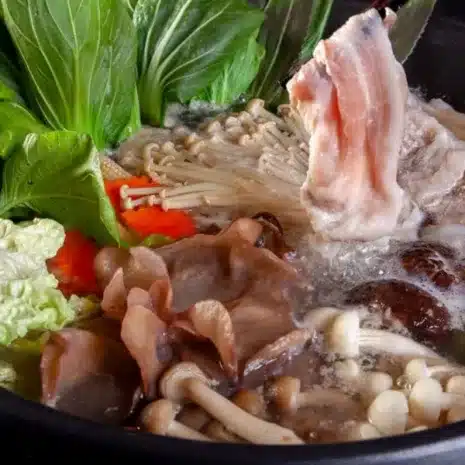
Teochew bak kut teh is a clear pork rib soup that bites back with white pepper. It is not the dark herbal kind. The recipe is short: blanch meaty spareribs to pull out the scum, then simmer them with whole garlic bulbs and plenty of crushed white pepper for 45 minutes to an hour. Blanching first is what keeps the soup clear. Pepper going in at the start, not the end, is what makes it Teochew.
The usual problem. The soup comes out grey and muddy, and the pepper sits on top like seasoning instead of running through it. Three causes, all fixable: the ribs went in unblanched, the pot boiled too hard, or ground pepper got stirred in at the end instead of simmered from the start.
Why meaty spareribs are the cut
Bak kut teh means pork bone tea, and the bone is not decoration. Bone, marrow, and the connective tissue around it feed the soup in a way boneless pork cannot. Meaty spareribs give you both halves of the dish at once: the bones build the broth while the thick cap of meat on each rib stays worth eating after an hour in the pot. Ribs with barely any meat make a decent soup and a sad plate.
Ask for the ribs cut into single-bone pieces, roughly 8cm long. Oversized pieces look generous but cook unevenly and are awkward to eat with rice. If you like a bit of cartilage to chew, the soft bone ends are prized for exactly that.
What you need, serves 4
- 1kg meaty pork spareribs, cut into single ribs
- 3 whole bulbs of garlic, unpeeled, loose papery skin rubbed off
- 2 tablespoons white peppercorns
- 2.5 litres of water
- Salt or light soy sauce, to season at the end
- To serve: white rice, you tiao, and a saucer of dark soy sauce with sliced chilli
Blanch, then simmer, step by step
- Put the ribs in a pot, cover with cold water, and bring to a boil. Let them roll for 5 minutes while the grey scum rises.
- Drain everything, rinse each rib under the tap, and wash out the pot. This five minute detour is the entire secret of a clear soup.
- Toast the peppercorns in the dry pot for a minute until fragrant, then crush them coarsely. Tie them in a muslin bag or a disposable soup pouch if you would rather not chew one later.
- Return the ribs with 2.5 litres of fresh water, the garlic bulbs, and the pepper. Bring it just to a boil.
- Drop the heat until the surface shivers but does not bubble. Lid ajar. Simmer 45 to 60 minutes, skimming anything that surfaces.
- Season with salt or a little light soy at the end, and only at the end. Serve scalding hot with rice, you tiao for dunking, and the dark soy and chilli dip.
The pepper is an ingredient, not a garnish
Teochew style leans on white pepper the way the Klang style leans on herbs. Toasting the peppercorns wakes them up, and crushing them coarse lets the heat release slowly across the whole simmer, so the warmth builds sip by sip and sits at the back of your throat. Stirring ground pepper into a finished soup gives you a sneeze, not a soup.
Two tablespoons is a confident, stall-level dose. If your table includes children, start with one tablespoon and put a pepper grinder next to the chilli.
Keeping the soup clear
Clarity is the mark of a Teochew pot, and it only asks two things: blanch first, and never let the pot boil hard again after that. A rolling boil churns fat and protein into the broth and turns it grey. If you are eating in rounds and topping up, add hot water and let it come back to a shiver, not a boil. A dark braise such as black vinegar pork trotters forgives a hard boil, but this pot does not.
Leftover soup is a gift. Strain it, chill it, lift off the fat once it sets, and you have a peppery pork stock for tomorrow’s noodles. The garlic bulbs will have collapsed into sweetness by then. Squeeze them into the bowl and thank the Teochews.
One more stall habit worth copying: warm the bowls. A clear soup this light turns lukewarm fast, and lukewarm pepper soup loses half its charm. Rinse the bowls with hot water before you ladle, and bring the pot back to a shiver between refills. This soup is meant to arrive almost too hot to sip.
Before it hits the pot
Thaw frozen spareribs overnight in the chiller, never on the counter. SFA’s thawing guidance says frozen food should not be left at room temperature, and puts the chiller between 0°C and 4°C.1 Ribs with a frozen core throw the blanch timing off and the scum never fully lifts. Check with a skewer for ice crystals first, and cook what you thaw the same day.2
Start with ribs that earn the soup
Meaty spareribs feed the broth and the bowl at the same time. Blanched clean, they are the whole dish.
- Singapore Food Agency, Guidelines on Thawing of Food (updated 27 Sep 2024): “Frozen food should therefore not be left to thaw at room temperature, to prevent food poisoning bacteria that may be present from multiplying to high levels.” The same guidance recommends thawing in a chiller “maintained at a temperature not below 0ºC and not above 4ºC”, and adds: “Thaw only the amount of food you require for cooking.” sfa.gov.sg (PDF, p.1) ↩︎
- SFA, same guidelines: “Check for ice crystals in the food using your hand or a skewer.” And on holding: “Cook thawed meat immediately and do not refreeze thawed food. Improper handling and refreezing of food may lead to the growth of bacteria.” sfa.gov.sg (PDF, p.1) ↩︎