
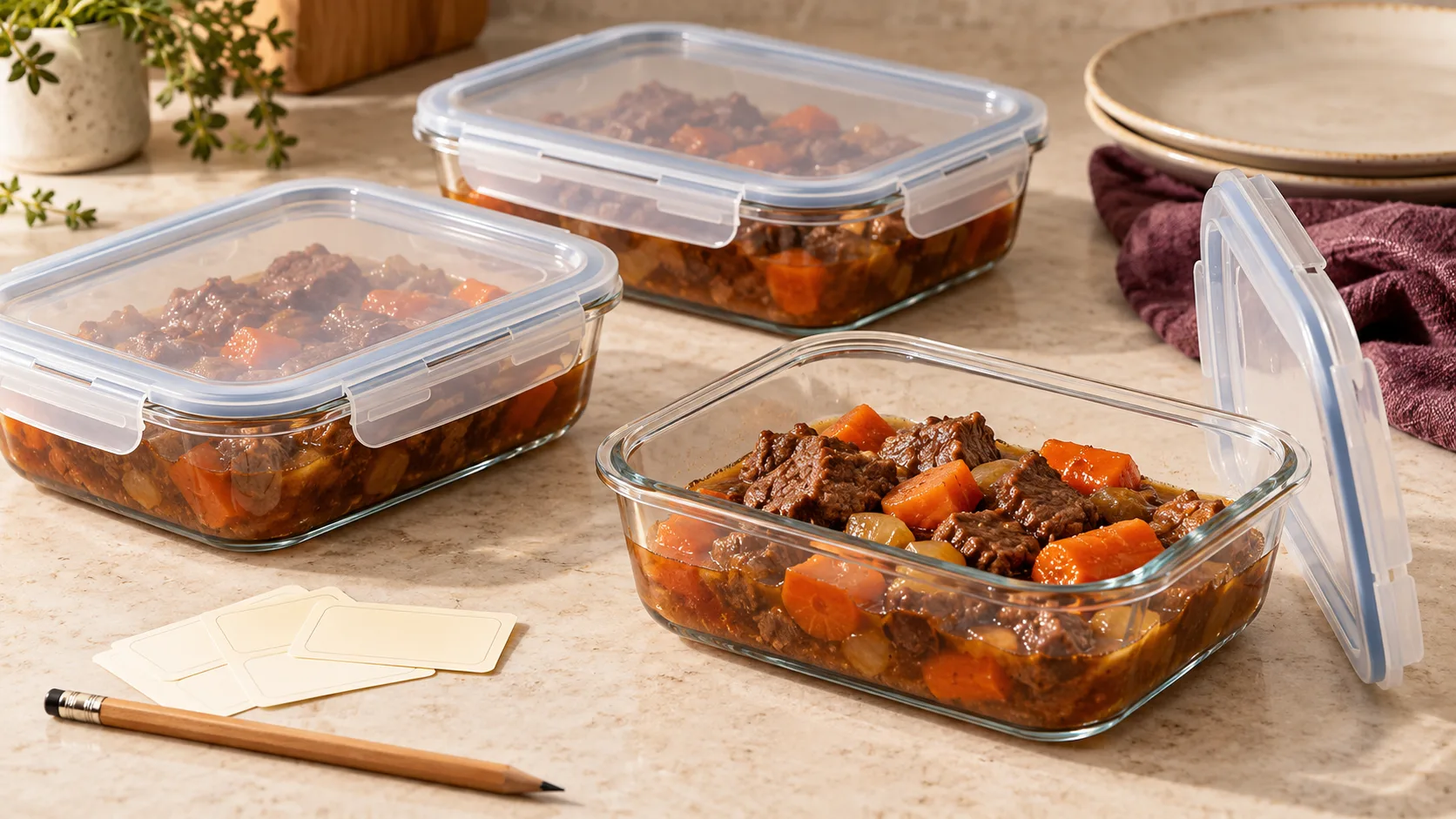
Cover: AI-generated food illustration; no specific seller product is depicted.
Divide cooked meat dishes into clean, shallow meal-sized containers and refrigerate them promptly. Freeze the portions you are saving after they have cooled safely. Do not leave a deep pot on the counter for hours waiting for every part to reach room temperature.
The CDC's Preventing Food Poisoning says small portions of hot food can go into the refrigerator and recommends shallow containers so they chill faster. The FDA's Refrigerator Thermometers guide gives the same prompt-cooling advice. A little preparation before dinner makes the spare portions easier to store safely.
Decide the portions before you serve
Have clean shallow containers, suitable lids, freezer labels and space in the refrigerator ready. Set aside the extra food with clean utensils instead of recovering it later from everyone's plates. SFA's Food Safety Tips recommend apportioning food for later meals into clean covered containers and serving only the portion you want to consume.
Choose a container size that matches the next meal. For example, three single-meal portions are easier to use separately than one large tub when only one person needs lunch. This is a portioning example, not a nutritional serving recommendation.
Cool, label and freeze in this order
- Cook the dish thoroughly first. Follow a complete recipe and check the food's temperature. SFA recommends thorough cooking at temperatures above 75°C.
- Divide the spare food promptly. Transfer it into clean shallow containers. Avoid leaving it as one deep mass in the cooking pot.
- Refrigerate promptly. Do so within two hours, or within one hour if exposed to temperatures above 32°C. Small portions can enter the fridge while still hot; do not wait on the counter for a large pot to become cold. Cover and store them so raw-food juices cannot reach them.
- Keep the fridge cold. Check it is at 4°C or below and leave room for cold air to circulate. Avoid packing the shelves tightly around a batch of warm containers.
- Freeze the cooled portions you are saving. Use suitable freezer containers, close them securely, and record the dish, cooked date, frozen date and portion count. Keep the freezer at −18°C or below.
- Keep a simple record. Put the portions on your freezer inventory so they become planned meals rather than unidentified tubs.
The time limits and shallow-container method are supported by the CDC and FDA guidance. Freezing is a storage step for food handled safely; it cannot repair a dish that has already sat out too long.
Decide which portions to chill and which to freeze
The Cold Food Storage Chart gives cooked meat or poultry leftovers a refrigerated period of 3–4 days at 4°C or below. Follow any shorter applicable instructions. If you do not plan to eat a portion within that period, freeze it promptly after safe cooling rather than waiting until the last day.
For a hypothetical three-portion batch, you might keep one chilled for a planned meal and freeze the other two once safely cooled. Label all three when you pack them; a frozen date alone can hide the earlier cooked date.
Reheat one meal at a time
Thaw a portion safely in the refrigerator. Reheat stored cooked food at 75°C and above for at least two minutes, following SFA's guidance. Stir and check the food as appropriate to the dish and appliance so the centre is heated, and follow microwave standing instructions when applicable.
SFA advises against reheating more than once. Take out only the portion you will eat, use clean utensils and keep the remaining stored portions cold. Repeatedly warming the whole tub is the problem that individual containers help you avoid.
Before your next batch, count the meals and freezer spaces you have available. Browse beef listings for your chosen complete recipe, and confirm the actual pack and storage instructions with the seller.