
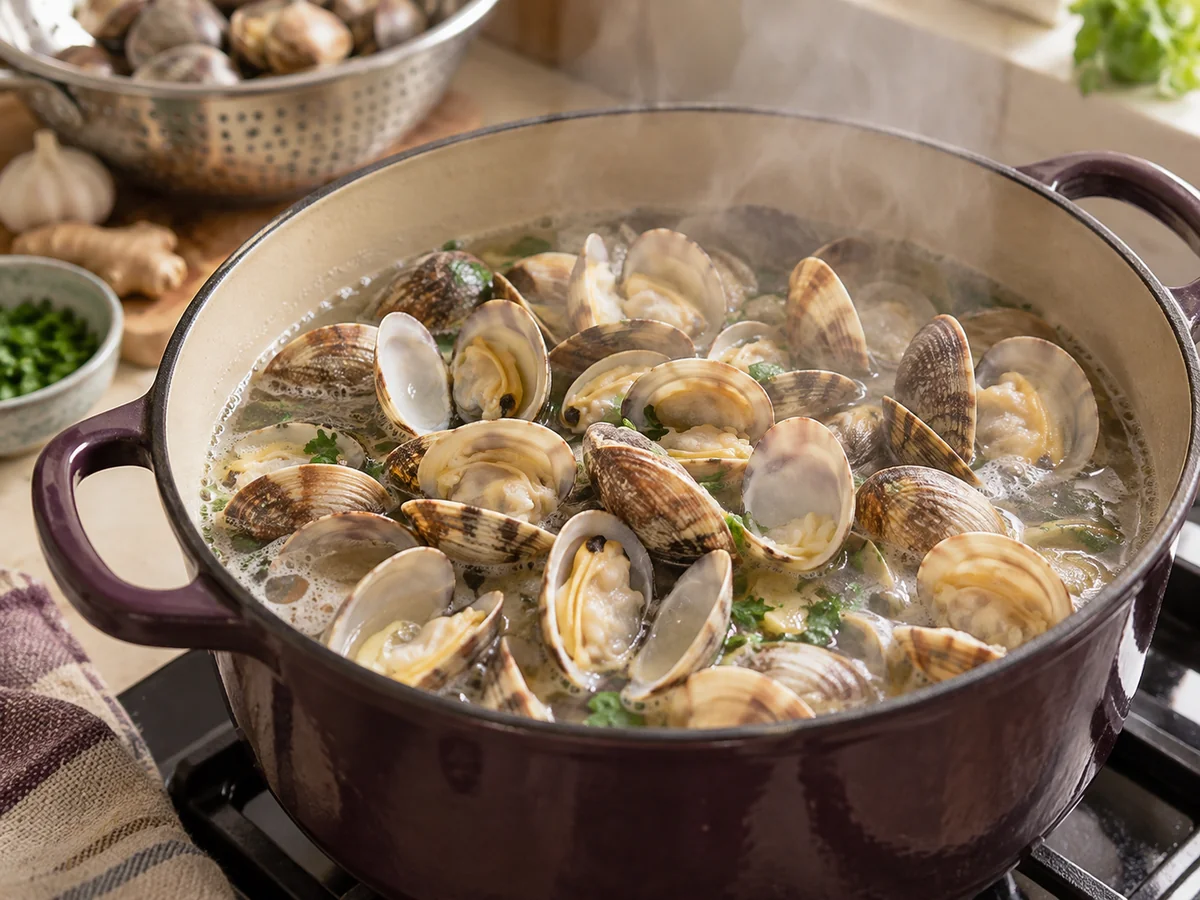
Shell-on frozen clams can go straight from the freezer into hot liquid, no thawing needed, and they are done the moment their shells open. That is the whole method. Rinse the ice glaze off under a cold tap, drop them into a boiling soup, a steaming basket, or a bubbling sauce, and start pulling them out as they pop open. Lala shrink and toughen only when they keep cooking after that point, so the plump-and-sweet part is less about what you do and more about when you stop.
The usual problem. The clams went in, the shells opened, and then the pot kept simmering for another five minutes to be safe. Safe turned every clam into a pencil eraser. An open shell is a finished clam. Everything after that is shrinkage.
What freezing changes
Less than you would think, and mostly in your favour. Most frozen lala is cleaned and purged before it is frozen, so the long salt-water soak that fresh clams need to spit out their sand is usually already done for you. Check the pack, then skip straight to cooking.
Do not be alarmed if some shells sit slightly ajar in the bag. That is the muscle relaxing in the freezer, not a spoiled clam. The doneness signal still works exactly the same way: in the heat of the pot, a good clam swings wide open. That signal is all you need for lala in white wine and garlic.
Straight in, or thaw first?
For most wet cooking, straight from frozen is the right call. The clams heat through in a couple of minutes, and the shells give you a built-in doneness signal. Go straight from frozen when:
- The liquid is already hot: a rolling soup, a steamer at full steam, or a sauce at a hard simmer. Frozen clams dropped into cold liquid just sit and soak.
- The batch is modest. A big frozen load can knock a small pot off the boil, so add them in two waves and let the liquid recover between.
- The dish forgives a minute either way: lala soup, steamed clams, clams in gravy over rice.
Thaw first when you need control or a dry pan:
- A fast dry stir-fry, where melting ice would flood the wok and turn the sauce to water.
- You want to sort the batch before cooking and bin any with crushed or badly chipped shells.
- You are cooking shelled clam meat, which weeps as it thaws and should be drained well before it goes anywhere near hot oil.
To thaw, use the chiller: a covered bowl on the lowest shelf, a few hours or overnight.1 In a hurry, use a sealed leak-proof bag submerged in ice water, with the water changed so it stays cold.2 Never the counter and never warm water. And thawed clams are a same-day job: cook them, do not refreeze them.3 Surface water is the same enemy when you want frozen scallops to brown instead of steam.
The stop-when-they-open rule
A clam's shell is held shut by a muscle. Heat cooks the muscle, the muscle lets go, and the shell swings open. That is why an open shell means done: the meat inside has just reached cooked, and not a minute more.
Work with tongs and pull clams out as they open, instead of waiting for the whole pot to finish together. The first ones open a minute or two before the last, and those early openers are exactly the ones that turn rubbery if they stay in the heat. From frozen, expect the first shells to start opening a little later than fresh clams would, then all at once.
A few clams may stay shut after everything else has opened and had an extra minute of grace. Bin those. Do not pry them open at the stove, and do not boil the whole pot to death waiting for them.
Keeping them plump in soup and sauce
- Build the dish first, clams last. Broth seasoned, sauce thickened, aromatics fried. The clams should be the final two minutes of the recipe, not the first ten.
- Kill the heat as the last shells open. Residual heat keeps the dish hot without cooking the clams any further.
- If the soup has to keep simmering, lift the opened clams out and drop them back in just before serving.
- Save the liquor. The liquid the clams release is the sweetest thing in the pot. Taste it before you add any more salt.
Shelled clam meat: no shell to watch
Clam meat without the shell loses the built-in doneness signal, so use your eyes instead. Thawed, drained clam meat needs one to two minutes in a hot wok or a simmering gravy: the flesh turns opaque and the edges just begin to curl. Pull it there.
Clam meat is small, and the line between plump and pellet is about sixty seconds wide. It always goes in last, and if the dish will sit hot for a while, stir it in off the heat and let the residual warmth do the cooking. Sotong runs on the same clock, which is how sambal sotong stays tender.
Lala night, minus the shrinkage
Frozen clams keep their sweet briny liquor locked in the shell until the heat opens it. Stop on time and every clam stays plump.