
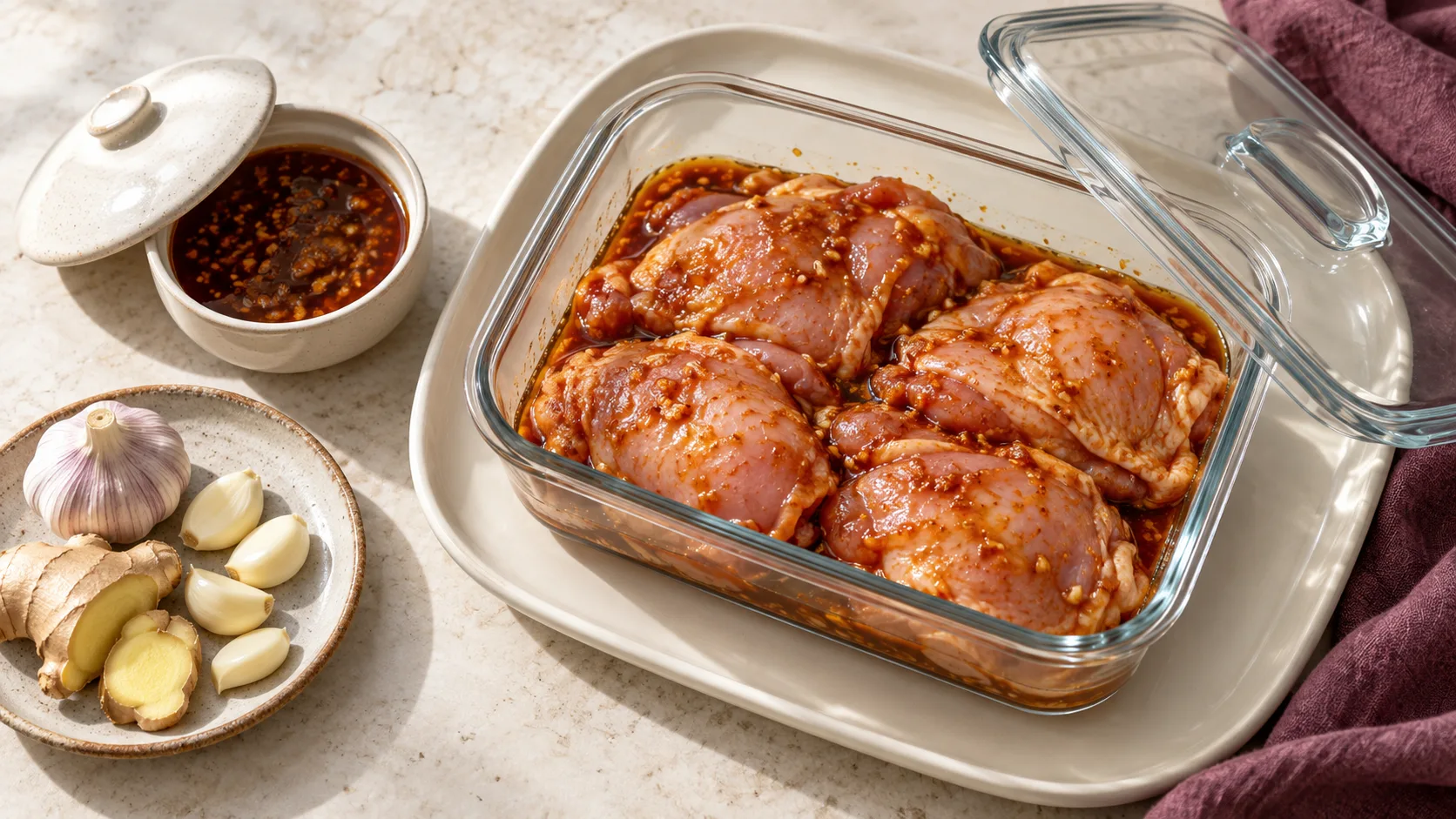
Cover: AI-generated food illustration; no specific seller product is depicted.
Thaw the meat in the refrigerator, marinate it there in a covered food-safe container, and reserve a separate clean portion of sauce before it touches raw meat. Marinating adds flavour; it does not replace safe chilling or thorough cooking.
That distinction matters when you are preparing several trays for a BBQ. The University of Illinois Extension's Marinating guide explains that even an acidic marinade cannot be relied on to kill harmful microorganisms. The FDA's Barbecue Basics also recommends refrigerating marinating food and keeping a clean sauce portion in reserve.
Set up before you open the raw meat
You need your chosen recipe and its measured ingredients, a covered food-safe container or suitable resealable food bag, a tray to contain leaks, a separate container for serving sauce, clean utensils and a food thermometer. This is a handling method; use a complete recipe for the marinade's quantities and flavour balance.
Choose glass, stainless steel or packaging specifically intended for food use. Illinois Extension includes these materials in its guidance. Keep the original meat label nearby so its use-by and storage instructions remain available after repacking.
Follow the preparation in this order
- Thaw in the fridge. Put the covered pack on a tray below cooked and ready-to-eat food. Keep the refrigerator at 4°C or below. Do not leave the meat on the counter to soften.
- Make the marinade. Follow your recipe, then immediately set aside any sauce you intend to serve with the cooked food. Cover that clean portion and refrigerate it separately.
- Combine and cover. Add the remaining marinade to the raw meat in its food-safe container. Put it straight back in the fridge on the leak-catching tray.
- Use the recipe's marinating period. A longer soak is not automatically better. Illinois Extension notes that delicate seafood and already tender meats can become tough or mushy with prolonged marinating. A recipe's timing never overrides the meat's storage limit.
- Take out only the next cooking batch. Keep the other portions chilled while the BBQ is running. Use raw-food utensils to load the grill and clean utensils and a clean plate for cooked food.
- Cook thoroughly and check the centre. Follow the complete cooking method and use a food thermometer. SFA's Food Safety Tips recommend thorough cooking at temperatures above 75°C.
Wash hands, utensils and surfaces after handling the raw meat. SFA recommends keeping cooked food above raw food in the fridge and advises against washing raw meat, which can spread contaminated juices.
Keep the serving sauce out of the raw tray
The simplest arrangement is two containers from the start: one for raw meat and one for clean sauce. Discard the used raw-meat marinade in this workflow. Do not pour it over the cooked food, and do not dip a raw-food brush into the clean sauce.
For example, if you plan to brush cooked chicken with a finishing glaze, pour that glaze into its own covered container before adding any chicken to the marinade. Put a clean brush beside it. This avoids trying to remember which spoon touched which tray during a busy meal.
If the BBQ is delayed
Leave the meat in the fridge while you decide what to do. Do not extend its use-by date or normal chilled storage period because it is now covered in marinade. If you have lost track of its warm exposure or handling, do not rely on the acidic smell to judge safety.
Choose your cooking method and recipe before ordering. Browse chicken listings and confirm whether the selected pack is plain or already seasoned, along with the seller's storage instructions.