
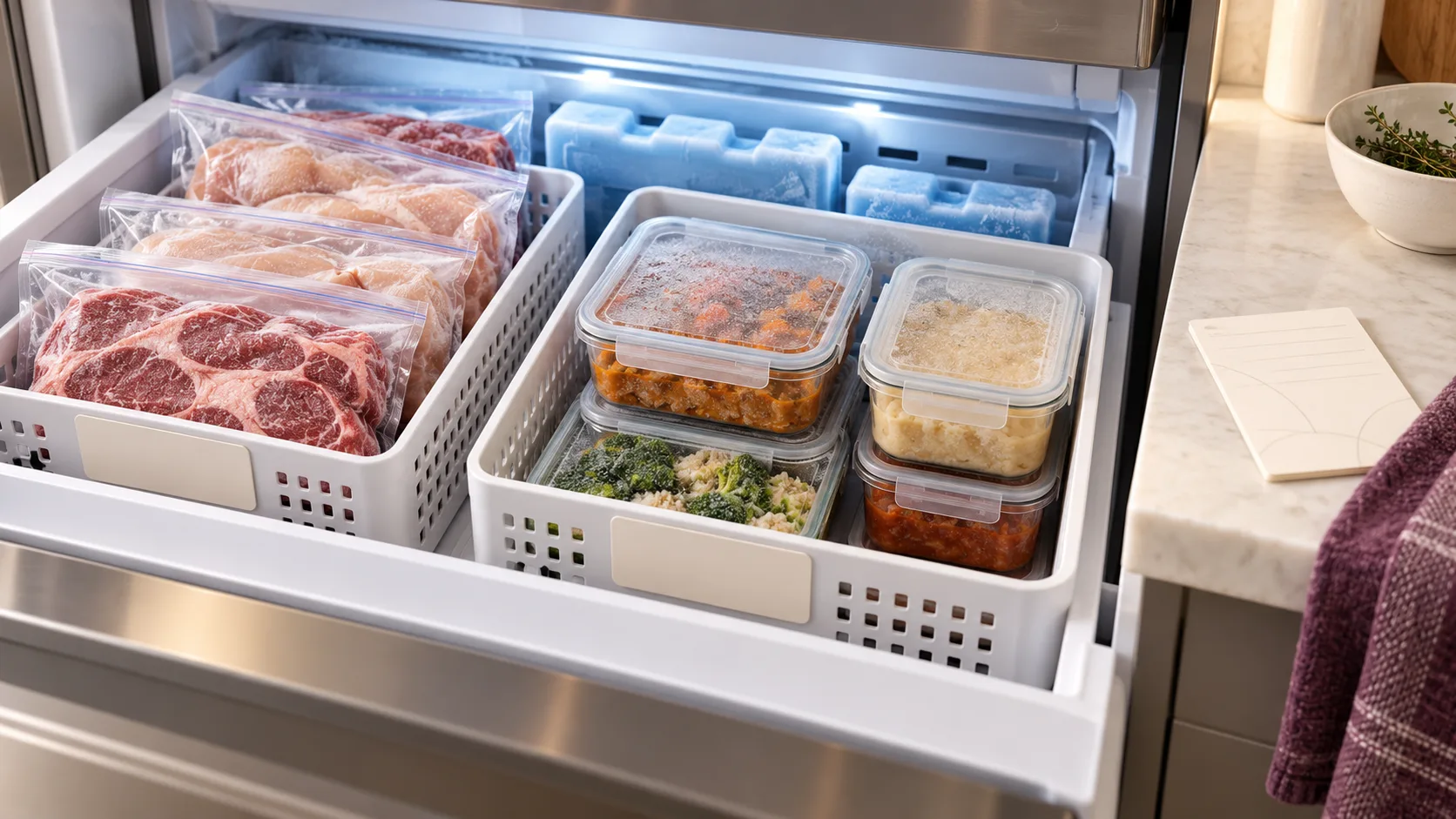
Cover: AI-generated food illustration; no specific seller product is depicted.
Give each pack a clear label, group similar foods in separate sections, and keep a short inventory outside the freezer. Use the older suitable packs first, while still following each product's expiry and storage instructions.
The Singapore Food Agency's Food Safety Tips recommend first-in, first-out use, a freezer at −18°C or below, and enough space for cold air to circulate. An inventory turns those principles into a shopping and meal-planning routine you can actually maintain.
Set up without a long warm sorting session
Prepare a pen, freezer labels and your inventory sheet first. Decide on sections before opening the drawer: for example, raw poultry, raw red meat, seafood, and cooked meals. Use suitable containers or dividers to keep packs contained and identifiable; do not obstruct the appliance's vents.
Work through one small section at a time and return food to frozen storage promptly. Keep raw food securely wrapped and separate from cooked and ready-to-eat food. If a pack has thawed or its handling history is uncertain, resolve that with the relevant safety guidance rather than simply relabelling it as new.
Put the useful facts on the pack
Keep the original product label wherever possible. For a repacked portion, record what it is, whether it is raw or cooked, the amount or number of portions, the date packed or frozen, and the original use-by and storage instructions. Use a label you can read without opening the pack.
Dates do different jobs. The freezing date helps you rotate what you have; it does not replace the manufacturer's use-by instructions or prove how the food was handled before freezing. Never invent a date for an unidentified old pack just to complete the sheet.
Copy this simple inventory
The entries below are hypothetical household examples, not stock held or sold by FrozenMeat.sg. Choose units you will use consistently: packs, pieces or measured portions.
| Section | Item and state | Amount | Date frozen | Planned use |
|---|---|---|---|---|
| Poultry | Raw chicken thighs | 2 labelled packs | Your recorded date | Two separate dinners |
| Red meat | Raw beef mince | 1 labelled portion | Your recorded date | Chosen mince recipe |
| Cooked meals | Cooked meat stew | 2 single-meal containers | Your recorded date | Two reheated meals |
Add a column for the original use-by instructions if you keep the inventory on a phone or spreadsheet. Keep uncertain or missing information visible rather than filling it with guesses.
Make the sheet part of cooking and shopping
When you remove a pack, cross it off immediately. When you add one, write it down before the shopping receipt disappears. Put the older suitable packs in the most accessible part of each section so the next meal is easy to find.
Before ordering, look at the sheet and choose meals around what is already there. For example, if two cooked portions cover two lunches, they need not be replaced with two more packs of raw meat. Count the meals your household actually plans to cook, then buy the missing ingredients.
Check the freezer as well as the list
An accurate inventory cannot compensate for an appliance that is too warm. Use an appliance thermometer and check it regularly. The FDA's Refrigerator Thermometers guide explains why a temperature control dial is not the same as an actual temperature reading.
Keep the list short enough to update. Once you know what is missing, browse the frozen-food catalogue and choose packs that fit the space and meals you have planned. Confirm the seller's current pack and storage instructions before ordering.