
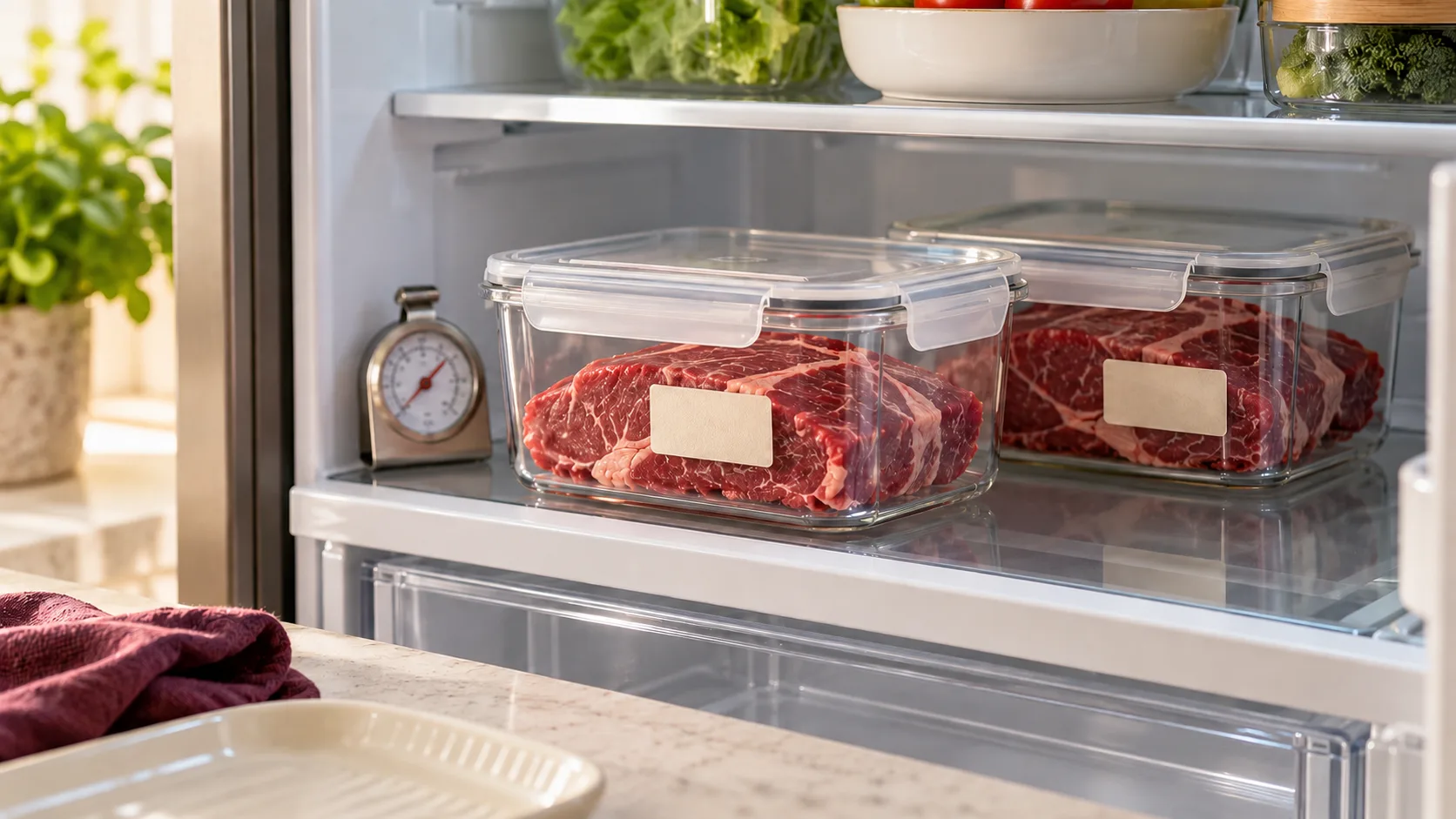
Cover: AI-generated food illustration; no specific seller product is depicted.
Meat thawed safely in the refrigerator can generally go back into the freezer without being cooked first. Meat thawed in cold water or a microwave should be cooked before refreezing. If it has become too warm, freezing it again will not make it safe.
The useful question is how the pack has been handled, rather than how many times the freezer door has opened. Utah State University's Freezing Basics distinguishes these routes and warns that another freeze–thaw cycle can reduce quality.
Make the decision before the pack warms up
Keep the meat cold while you check its history. Use an appliance thermometer to confirm the refrigerator is at 4°C or below; a freezer should be at −18°C or below. These are also the temperatures in the Singapore Food Agency's Food Safety Tips.
| What happened to the meat? | What to do next |
|---|---|
| Thawed in a working refrigerator and remained safely chilled | Refreeze promptly within its safe refrigerated storage period, or cook it. Follow any stricter pack instructions. |
| Thawed in cold water | Cook immediately, then cool and freeze the cooked portions safely. |
| Defrosted in the microwave | Cook immediately before cooling and freezing it. |
| Left on the counter, with an uncertain warm period | Do not treat refreezing as a rescue. Discard when its safe handling history cannot be established. |
Cold-water and microwave thawing require immediate cooking, as the FDA explains in Safe Food Handling. A frozen centre does not establish that the outside stayed cold.
Refreeze within the meat's remaining fridge time
The Cold Food Storage Chart gives short refrigerator limits: 1–2 days for raw poultry and mince, and 3–5 days for raw beef, pork and lamb steaks, chops and roasts at 4°C or below. Treat these as general guidance, not extra time added to an already old pack. Follow the earlier limit when the label gives a shorter period.
Write down when you moved the meat into the fridge and when you portioned it. If you cannot establish its history, a fresh freezer label cannot supply the missing information. Keep the original use-by and storage instructions with the portions.
An example: dinner plans change after thawing
Suppose you moved two sealed chicken portions into a refrigerator for tomorrow's dinner, but now need only one. If both stayed safely chilled and remain within their permitted storage period, cook one and promptly refreeze the other. Keep the refrozen portion covered in suitable freezer packaging, record what happened, and plan to use it without another unnecessary thawing cycle.
If those same portions were microwave-defrosted, the decision changes: cook both immediately, then safely cool and freeze the spare cooked portion. The preparation method matters more than whether the meat still looks raw.
Quality can change even when handling was safe
Thawing can release moisture; another cycle may leave the meat less juicy. This is a quality issue, separate from its temperature history. Neither a normal smell nor an attractive colour proves safety. The FDA's Refrigerator Thermometers guide warns that unsafe food can look and smell normal.
For your next shop, choose packs that fit a meal you can actually prepare. Compare chicken listings and confirm the pack format and storage instructions with the seller before ordering.