
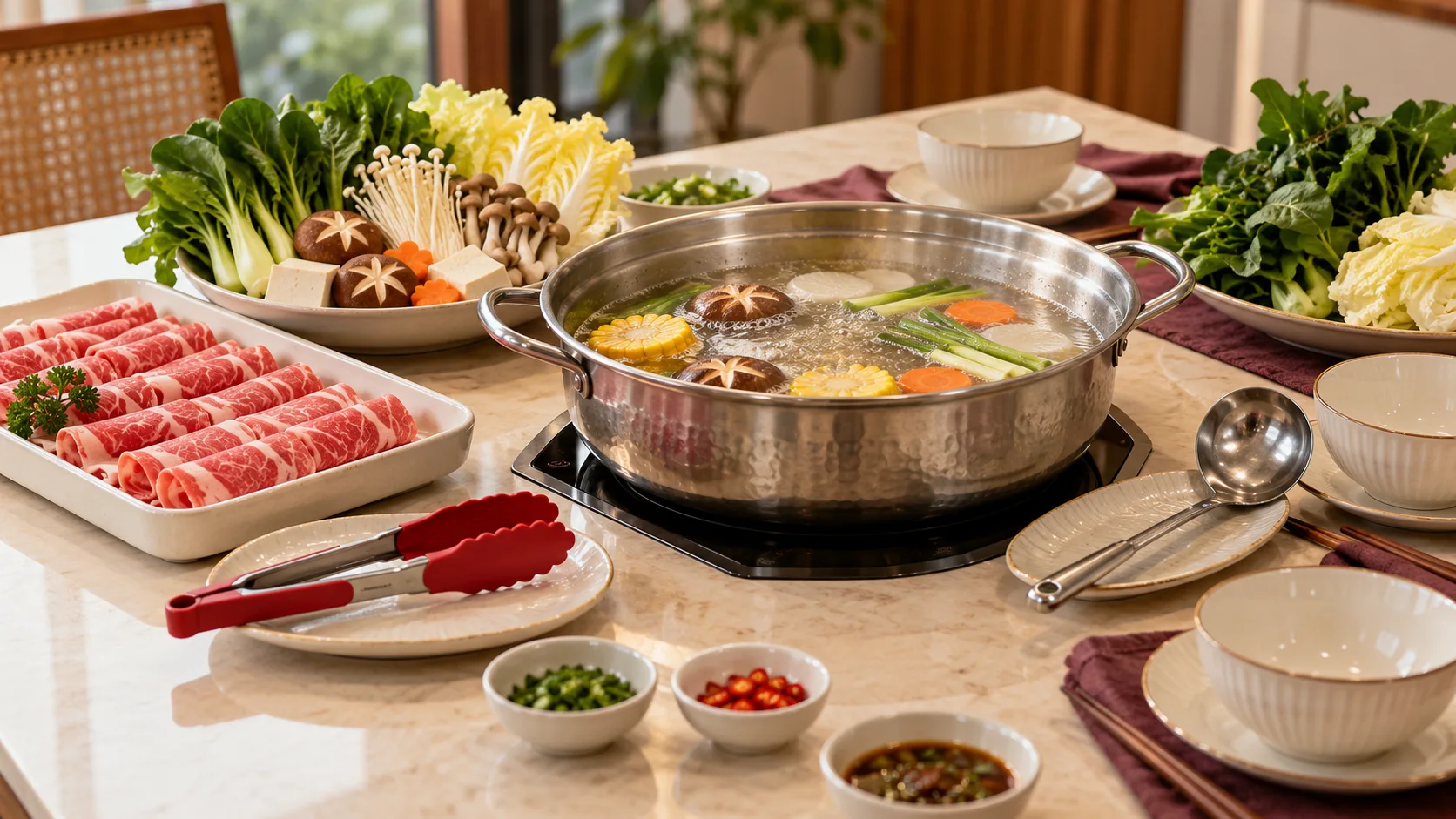
Cover: AI-generated food illustration; no specific seller product is depicted.
Give raw ingredients their own trays and utensils, keep spare portions chilled, and wait for thorough cooking after each addition to the pot. A boiling broth at the start does not mean every later piece is ready to eat.
The Singapore Food Agency's Enjoying Hotpot Safely recommends separate utensils for raw and cooked ingredients, boiling broth before ingredients are added, and avoiding an overcrowded pot. Here is a practical way to arrange those rules around a home table.
Create three clear areas
Before guests sit down, decide where raw food, cooking utensils and eating bowls belong. This is an example layout, rather than a special type of hotpot equipment you need to buy.
| Area | Put here | Keep out |
|---|---|---|
| Raw ingredients | Separate contained trays of meat and seafood; dedicated raw-food tongs or chopsticks | Cooked food, eating bowls and clean serving spoons |
| Pot and cooking | The hotpot, a clean serving ladle and utensils reserved for removing cooked food | Raw-food tongs resting inside finished food |
| Eating and sauces | Individual bowls, eating chopsticks and individual sauce dishes | Raw trays and their juices |
Choose noticeably different utensils so their jobs are easy to remember. For example, red-handled tongs can stay with the raw meat while a stainless ladle stays on a clean saucer by the pot. Explain the arrangement before cooking starts.
Bring out small batches
Thaw frozen ingredients safely in the refrigerator and keep covered spares cold until needed. SFA's Food Safety Tips recommend a fridge at 4°C or below and keeping raw juices away from cooked food. Put raw packs on trays so they cannot drip onto other ingredients.
Avoid filling the table with the entire evening's supply at once. A small first tray gives you less food to manage while people settle in. When it is finished, bring out another chilled portion using a clean tray. Do not top up a tray indefinitely while losing track of how long its contents have been sitting out.
Cook in batches you can follow
- Bring the broth to a boil before adding ingredients.
- Add a manageable batch rather than packing the pot tightly.
- After raw ingredients go in, stop serving the broth and food until the new ingredients have cooked thoroughly. SFA specifically warns against drinking the broth or removing cooked food immediately after raw additions.
- Check thicker pieces carefully. SFA's general advice is thorough cooking at temperatures above 75°C; use a suitable food thermometer rather than assigning one universal number of seconds to every cut.
- Remove cooked food with the clean serving utensils and place it into clean bowls. Leave the raw-food utensils with the raw tray.
This batch approach is especially helpful when several people would otherwise keep adding raw meat while someone else is fishing out a cooked piece.
Keep the distinction through the whole meal
If utensils get mixed up, replace or thoroughly wash the affected utensils before using them for cooked food. Wash hands after handling raw packs. Do not return cooked meat to a plate that held raw meat. These separation rules are also supported by the CDC's Preventing Food Poisoning.
Once you have planned the table and cooking batches, compare beef listings and look for the slice format your chosen hotpot recipe needs. Confirm the actual pack and preparation instructions with the seller.