
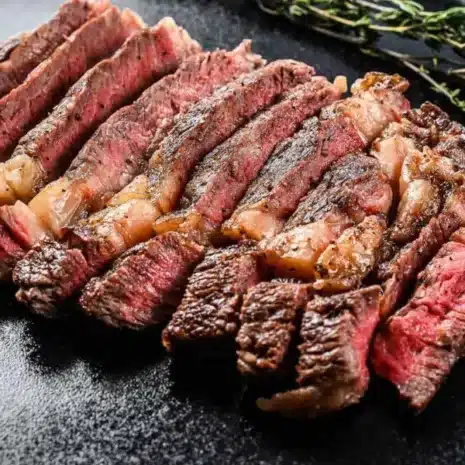
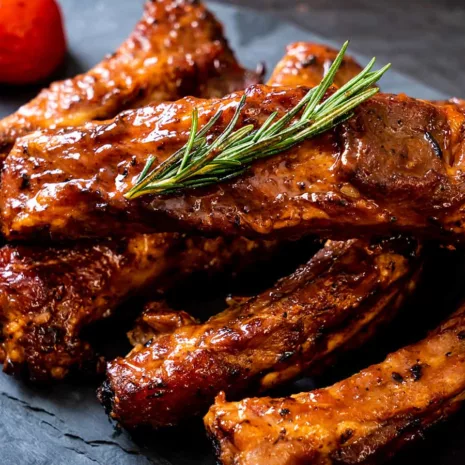
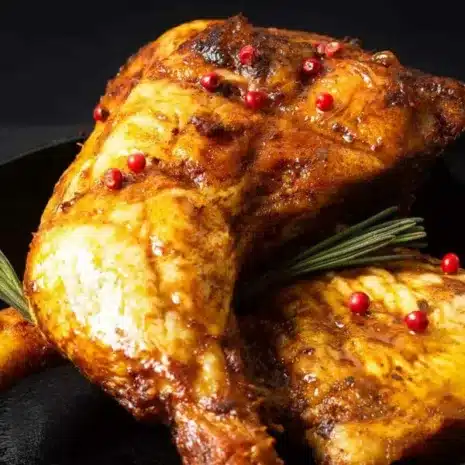
Ribeye, tenderloin, knuckle, shank, leg. Same animal, five different methods. Every cut of beef comes from a different part of the cow, and that part decides how it should be cooked. Match the cut to the method and every one of them comes out right.
The usual problem. A ribeye and a shank are both beef. Cook them the same way and one turns rubbery while the other stays tough. It is not your pan and it is not the price you paid. It is that the muscle did a different job on the animal, and that job decides the heat and the clock.
Ribeye: cook it hot and fast
Ribeye comes from the rib section, the part of the cow that barely moves. That is why it carries thick streaks of fat through the muscle, called marbling. The fat melts as it cooks and bastes the meat from the inside.
Pan-sear or grill it on high heat for a few minutes each side. Rest it for five minutes before cutting so the juices settle back into the meat instead of running out onto the board. Medium rare to medium keeps the fat rendered without drying out the muscle around it.
Tenderloin: cook it fast, watch it close
Tenderloin sits under the spine and does almost no work for the animal. Less work means less connective tissue, which is why it is the most tender cut on the cow. It is also the leanest of the tender cuts, with very little fat to protect it from overcooking.
Sear it hard and fast, then pull it off the heat the moment it hits the doneness you want. A few extra minutes turns tenderloin from silky to dry, because there is no fat left to carry it through. This is the steak to watch, not to walk away from. If you are still deciding between the two, ribeye and tenderloin compared side by side will settle it.
Knuckle: slice it thin
The knuckle comes from the top of the leg, where the muscle works harder and carries less fat than ribeye or tenderloin. Cooked whole and fast, it turns chewy. Sliced thin against the grain, it cooks in seconds and stays tender.
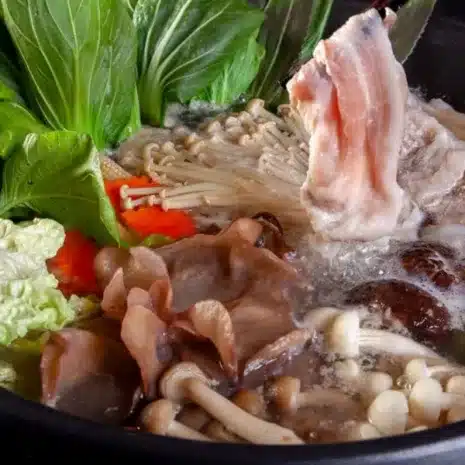
This is the cut for stir-fry, hot pot and shabu-shabu. Cut it thin, across the grain of the muscle fibres rather than along them, and it needs almost no time in the pan or the pot.
Shank: cook it low and slow
Shank comes from the leg itself, the part that carries the animal’s full weight. It is dense with connective tissue and tough muscle fibre, and no amount of high heat will make it tender. Hard-working muscle is full of collagen, and collagen only lets go with heat and moisture, not heat alone.1 That is the whole reason a dry roast fails here and a wet pot works.
Braise or stew it low and slow, covered in liquid, for a few hours. The connective tissue melts into gelatin, and the meat goes from tough to fall-apart soft. This is the cut behind a good beef stew, soup or bone broth.
Leg: the everyday roasting cut
Beyond the shank and knuckle, the leg breaks into cuts like topside and silverside, leaner than rib or loin but still solid for a family meal. Roast it at a moderate oven temperature and slice it thin against the grain, or braise it the same way as shank for a softer result.
It is the cut to reach for when you want a Sunday roast or a pot of stew without paying ribeye or tenderloin prices. If your roast beef keeps coming out chewy, the leg is the usual suspect, and the fix is the wet pot rather than a hotter oven.
Quick reference: which cut, which method
| Cut2 | Where it sits | Method | Reach for it when |
|---|---|---|---|
| Ribeye | Rib, barely moves | High heat, pan or grill, medium rare to medium | You want a steak with fat through it |
| Tenderloin | Under the spine | High heat, short time, pull it early | You want the most tender cut, lean |
| Knuckle | Top of the leg | Thin slices, quick cook | Stir-fry, hot pot, shabu-shabu |
| Shank | The leg, full weight | Low heat, long time, braise or stew | Stew, soup, bone broth |
| Leg (topside, silverside) | Rear, working muscle | Moderate roast or slow braise | Sunday roast or stew, everyday price |
Handling beef at home
Thaw beef in the refrigerator, never on the counter. SFA is blunt about it: do not thaw food at room temperature, defrost it overnight in the fridge instead.3 It takes longer, but it keeps the outside of the meat out of the danger zone while the inside is still frozen.
Keep raw beef separate from vegetables and cooked food, on its own plate or tray, and wash anything the raw meat touched before it touches other food. Raw juices reaching cooked or ready-to-eat food is the most common cause of food poisoning, so cooked food goes above raw in the fridge, never below it.4
Cook each cut through to a doneness you are happy with, and check with a meat thermometer if you are unsure rather than judging by colour alone.
These five cuts cover most of what you will cook at home, from a fast Tuesday stir-fry to a slow Sunday stew. Get the cut right and the method picks itself. For the tougher cuts, velveting before the wok buys tenderness the cut alone will not.
Pick the cut, not the sticker
A shank at stew prices beats a ribeye you cooked wrong. Match the cut to the method and every meal on this list is within reach.
- Seasoned Advice (Cooking Stack Exchange), accepted answer to “Why did my roast beef turn out chewy and not tender? Where did I go wrong?”: “Working cuts have to exert a force, so the muscle must have lots of collagen to distribute the force from the tendon throughout the muscle. Collagen is a tough material which breaks down in the presence of heat and moisture, not just heat, so working cuts make poor roasts or steaks and are better braised or stewed.” The same answer notes the collagen “when broken down by moisture turns to gelatin which adds to the flavor and mouth feel”, and names round (topside and silverside in the UK, Australia and New Zealand) as a working cut. cooking.stackexchange.com ↩︎
- The cuts on this page, and what we stock them for: our beef selection. ↩︎
- Singapore Food Agency, Food Safety Tips: “Do not thaw food at room temperature. It is safer to thaw food by defrosting overnight in the refrigerator, or by using the microwave oven at defrost setting.” The same guidance puts the danger zone at 5°C to 60°C: “Bacteria grow most rapidly between 5°C – 60°C, a temperature range known as the ‘Temperature Danger Zone’.” sfa.gov.sg ↩︎
- Singapore Food Agency, same guidance: “Keep raw meat and seafood away from other foods, as their juices might cause cross-contamination. This is the most common cause of food poisoning and can occur when raw food comes into contact with cooked/ready-to-eat food.” SFA also advises to “Place cooked/ready-to-eat food above raw food to prevent contamination” and that it is “advisable to use separate chopping boards for raw and cooked/ready-to-eat food”. sfa.gov.sg ↩︎