
Shoulder is the cut for anything wet and slow: curry, briyani, stew. Ribs and neck bones are for soup, because bone and fat are what make sup kambing taste like sup kambing. Shank is for the longest braise you have patience for. Leg is the lean one, so keep it for grilling, chops and skewers, and stop trying to make it fall apart. Get that one decision right and mutton stops being difficult.
The usual problem. You buy a pack labelled only “mutton cubes”, simmer it for two hours for a curry, and end up with dry, stringy pieces sitting in a thin gravy. The recipe was fine. The cut was leg, and leg has no collagen to give. Half the mutton disappointments in Singapore kitchens are a cut problem wearing a recipe problem’s clothes.
What you will find on sale here
Most mutton sold in Singapore comes in from Australia, New Zealand or India, and the labelling is looser than it is for beef or pork. You will see shoulder, leg, ribs, shank, neck and a generic bag of “mutton cubes” that could be any of them. Ask, or look at the piece: shoulder shows several muscles running in different directions with seams of fat between them, leg is one large dense muscle with a smooth surface. Age matters as much as the cut, so it is worth knowing whether you are buying lamb or true mutton before you plan the dish.
Shoulder: the default answer
If you only ever buy one mutton cut, buy shoulder. It is a hardworking muscle group, which means collagen, and collagen is what turns into gelatine and gives you meat that stays moist through two hours in a pot. It also carries enough intramuscular fat to forgive a cook who wanders off.
Use it for curry, for briyani, for a plain stew with potatoes, for anything where the meat sits in liquid for over an hour. Cut it into 4 to 5cm chunks, larger than feels right, because it shrinks. A mutton curry built on shoulder is a different dish from the same curry built on leg, and it is the cheaper of the two.
Leg: lean, and it stays lean
Leg is the cut people reach for because it looks neat and has little visible fat. That is exactly the problem in a braise. There is not enough collagen to melt into gelatine, so long cooking gets you tender fibres with nothing holding moisture around them, which reads on the tongue as dry.
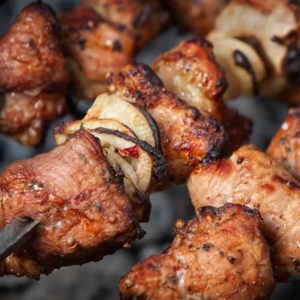
Where leg shines is fast, hot cooking. Cut it into steaks and grill them to medium. Cube it for satay or skewers on the mookata plate. Mince it for keema or kofta. Slice it thin for a quick fry with cumin and onion. Treat leg like you would treat a lean beef cut and it does not let you down.
Ribs: the soup cut
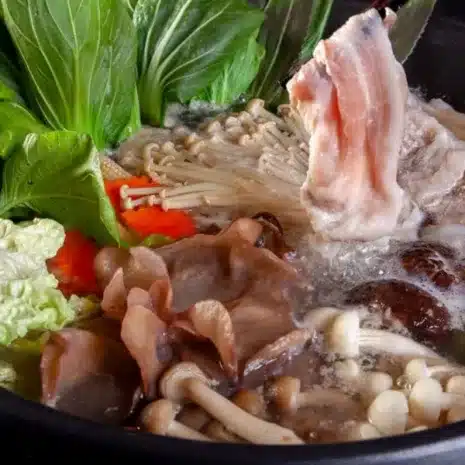
Mutton ribs are thin meat over bone with a generous layer of fat. Nobody buys them for the meat yield. You buy them because bone, marrow and connective tissue give a broth body and depth that boneless meat cannot, and because the meat that is there comes off the bone in soft strands after 90 minutes.
This is the backbone of a proper sup kambing, usually with a few neck bones thrown in. Ribs also grill well over charcoal once they have been par-boiled or marinated, and they are the cheapest way to feed a crowd mutton.
Shank: the long game
The shank is the lower leg, the hardest working muscle on the animal, wrapped in thick sheets of connective tissue. It needs 2.5 to 3.5 hours at a bare simmer and it punishes impatience. Give it the time and you get the best texture mutton offers, plus a gravy so full of gelatine it sets in the fridge.
Buy one shank per person and serve it whole. It is the only mutton cut that looks like an occasion without any work from you.
Bone-in or boneless
Buy bone-in for anything wet. Bones add gelatine and marrow to the liquid, they slow the heat reaching the middle of the meat so it cooks more gently, and they cost less per kilo even after you account for the weight you cannot eat. Reckon on roughly a third of a bone-in pack being bone.
Buy boneless when the eating format demands it: briyani you want to serve with a spoon, kebabs, anything for young children. You are paying for someone else’s knife work and for a thinner gravy, and both are fair trades in the right dish.
The short answer, by dish
- Sup kambing. Ribs plus neck bones. Bone-in without exception.
- Mutton curry or rendang. Bone-in shoulder, cut into large chunks.
- Briyani. Shoulder. Bone-in for flavour, boneless for easy serving.
- Grilling, mookata, satay, skewers. Leg, or ribs if you have charcoal and time.
- Clear soup with barley or lotus root. Neck bones and ribs.
- A one-piece centrepiece. Shank, one each, three hours.
- Keema, kofta, murtabak filling. Minced leg or minced shoulder.
Why frozen makes more sense for mutton than for anything else
None of this mutton is local. It was frozen after slaughter and shipped here in a container, so the chilled tray at the shop has usually been through the freezer already and then sat thawing on display. Buying it frozen skips that middle step, and what the freezer changes is far less than most people assume. Held at minus 18C, mutton keeps its texture for months.
Two practical gains. Mutton is a once-a-month dish in most households, so a frozen pack lets you cook it when you feel like it rather than within two days of buying. And half-frozen meat trims and cubes far more cleanly than soft chilled meat, which matters because trimming the hard outer fat is the main thing standing between you and a kitchen that smells of sheep.
Pick the cut, then cook it
Shoulder, leg, ribs and shank, frozen and labelled properly so you know what you are getting.