
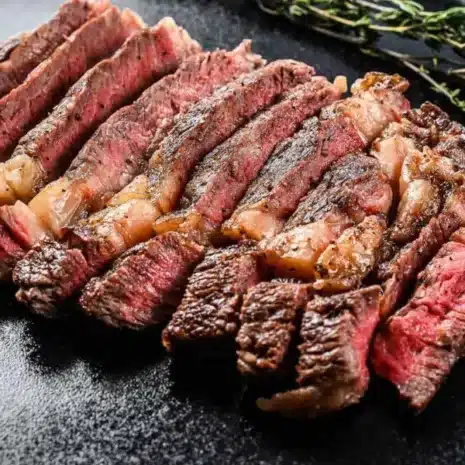
Pork collar is the cut from the neck end of the shoulder, and it is the answer when loin keeps cooking up dry. Fine threads of fat run through the whole muscle, so it stays juicy through grilling, pan-fried steaks and hot wok work. Korean barbecue built a signature slice on this cut. Most freezer aisles still walk right past it.
The usual problem. You buy loin because it looks clean and lean, cook it carefully, and it still lands on the table dry. Lean was the problem. The juiciness you were missing lives in the fat you avoided, and collar is the cut where that fat is woven right through the meat instead of sitting on the edge.
What pork collar is
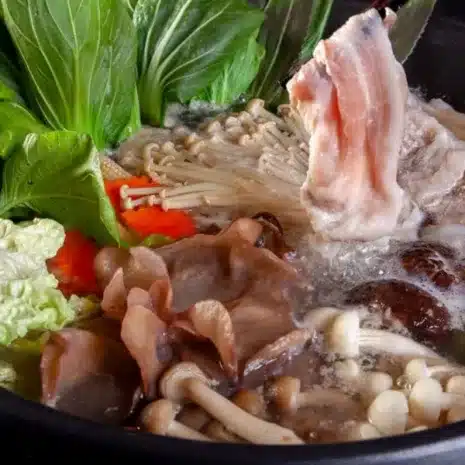
Collar comes from where the shoulder meets the neck. The US meat spec files it under the shoulder as the collar butt, which tells you its family: hard-working shoulder muscle, not a lean back cut.1 Shops sometimes label it pork neck or pork scotch. Whatever the name on the bag, the look gives it away: a deep pink block with fat laced through it like veins in marble, not sitting on top as a cap you could slice off. The muscle sits where the pig works hardest, and that work is what builds both the flavour and the fat. The same shoulder is one of the two cuts mookata runs on, alongside belly.
Collar vs loin: the juiciness maths
Collar’s home, the shoulder, carries 18g of fat per 100g raw against the loin’s 12.6g, whole cut against whole cut. Trim both down to pure lean and the shoulder still holds more fat inside the muscle itself, 7.14g against 5.66g.2 That inside fat is the part you cannot trim away, and it is the part that matters. It melts as the meat cooks and bastes it from within. Loin wears most of its fat as an edge, most people cut that edge off, and what is left has nothing to spend when the heat comes.
| Per 100g raw | Shoulder, collar’s primal | Loin |
|---|---|---|
| Fat, whole cut | 18 g | 12.6 g |
| Fat, trimmed to lean | 7.14 g | 5.66 g |
| On the plate | Self-basting, forgiving | Dry past the first careless minute |
The three jobs it does best
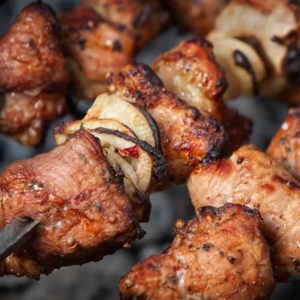
Grilled slices. This is the Korean barbecue cut, sliced across the grain about 1cm thick and laid on the grill until the edges brown and curl. The fat inside keeps each slice juicy at temperatures that would punish loin, which is exactly why grill restaurants lean on it.
A note on marinades. Collar barely needs one. Salt a little ahead of time and the cut brings its own moisture to the fire. If you do marinate, keep the sugar light, or the outside will char before the inside is done. Save the sweet glazes for the final minute on the grill, the way a char siu cook would.
Steaks. Cut collar 2cm thick and it makes a better pan steak than most of the pork sold as chops. Sear it hard on both sides, finish it gently, then rest it five minutes. It carves juicy all the way through, with none of the sawdust texture loin chops fall into.
Stir-fry. Thin collar slices stay tender through the hottest wok, where loin tightens and squeaks. Collar is also the classic char siu cut, and the same logic explains both jobs: long exposure to serious heat, still moist at the end of it.
How to cook it right
- Slice across the grain. The muscle fibres in collar run long, and cutting across them is half the tenderness.
- Do not trim the marbling. It is the point of the cut, and whatever renders out will flavour the pan.
- For steaks, pull it off the heat a touch early and rest it. The fat inside carries heat further than you expect.
- For the wok, slice thin while the block is still partly frozen, then let the slices thaw fully before they hit the oil.
When loin is still the right buy
Loin has a shape collar cannot copy: neat, pale, uniform medallions with a clean edge. If dinner is katsu or schnitzel, where you want an even flat piece under the crumb, loin is the right tool and nothing here should talk you out of it. For everything cooked over fire or tossed through a wok, collar wins. Underrated only means the crowd has not caught on yet, and in the freezer aisle that usually works in your favour. If you are stocking one pork cut for a mixed week of cooking, make it collar. It covers the grill, the pan and the wok without ever asking you to be careful.
Before it hits the fire
Thaw collar fully in the chiller, never on the counter. SFA is direct: frozen food should not be left to thaw at room temperature, and the chiller should hold between 0°C and 4°C.3 Marbling only does its work when the whole piece cooks evenly, and a frozen core ruins that. Check for ice crystals with a skewer, cook once thawed, and do not refreeze.
The cut the grill has been waiting for
Marbled through, forgiving on the fire, and better than loin everywhere juiciness counts.
- USDA Agricultural Marketing Service, Institutional Meat Purchase Specifications, Fresh Pork Series 400 (effective November 2014). Item No. 406, Pork Shoulder, Butt, Bone-In: “This item may also be referred to as the ‘Boston Butt’ or ‘Blade’.” Item No. 407A is listed as “Pork Shoulder, Collar Butt”. Belly is a separate item entirely, No. 408: “The belly is prepared from the side after removal of the leg, shoulder, loin, fat back, and spareribs.” The spec carries no entry for coppa, which is a cured neck product rather than a raw cut you buy for the grill. ams.usda.gov ↩︎
- USDA FoodData Central, SR Legacy (published 2019). Total fat per 100g, raw. Whole cuts, lean and fat: pork shoulder 18g (fdcId 167843) against pork loin 12.6g (fdcId 167818). Trimmed to lean only: shoulder 7.14g (fdcId 167845) against loin 5.66g (fdcId 168230). “Separable lean only” means every bit of fat that could be cut off has been, so what is left is marbling inside the muscle. Whole cut against whole cut, which is the only fair comparison. ↩︎
- Singapore Food Agency, Guidelines on Thawing of Food (updated 27 Sep 2024): “Frozen food should therefore not be left to thaw at room temperature, to prevent food poisoning bacteria that may be present from multiplying to high levels. Frozen food is recommended to be thawed in the chiller maintained at a temperature not below 0ºC and not above 4ºC, or by using a microwave oven.” The same document adds: “Check for ice crystals in the food using your hand or a skewer”, and “Cook thawed meat immediately and do not refreeze thawed food.” sfa.gov.sg ↩︎