
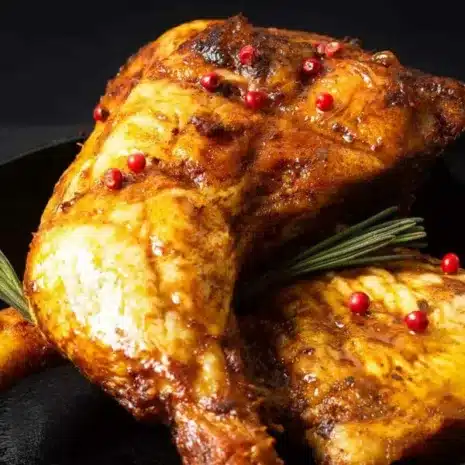
Kilo for kilo, a whole chicken is usually the cheaper way to buy chicken, because nobody has been paid to cut it up for you. But the shelf price is not the full answer. A whole bird includes bone and carcass weight, while a tray of boneless thigh is all meat. The fair comparison is cost per meal, and on that measure the whole bird only wins if you use the whole bird.
The usual problem. The whole bird looks like the obvious deal, so it comes home, gets roasted once, and the carcass goes into the bin with a meal’s worth of stock still in it. At that point the tray of parts might have fed you for less. The saving is not in the buying. It is in the using.
Do the maths fairly
Price per kilo is where everyone starts, and it flatters the whole bird. Part of its weight is bone and carcass you will not eat directly. Bone-in parts carry some bone too. Boneless parts are all meat, at the highest price per kilo on the shelf. So the per-kilo numbers are comparing different things.
Run the comparison once, properly. Roast one bird, pick it clean, and weigh what actually lands on plates. Now you know your own yield, and you can settle any whole-versus-parts price question at the shelf in ten seconds. A number from your own kitchen beats any published average, because it counts the way your household really eats.
What one bird actually gives you
Joint a whole chicken and this is what sits on the board:
- Two breasts, for a fast pan dinner or sliced into a stir-fry.
- Two thighs, the juiciest meat on the bird, for grilling or curry.
- Two drumsticks and two wings, for braising, baking or the air fryer.
- The carcass, neck and trimmings, which become stock.
For a small household, that is comfortably two dinners plus a pot of stock, and the stock quietly becomes a third meal: noodle soup, porridge, or the base of tomorrow’s curry. That stretch is the whole bird’s real advantage, and it is invisible on the price tag. It also helps to know how the leg cuts differ before you decide what each one becomes.
The carcass is the discount
Stock is the part of the bird most people throw away. Cover the picked carcass with water, add ginger and spring onion, and let it barely bubble for an hour or two while you do something else. What you pour off is the real thing that instant cubes imitate. If packet stock is on your regular shopping list, the whole bird is not just cheaper meat. It is cheaper soup too, and it freezes flat in bags for the weeks you have no time. The same works with stock from the bones you keep in the freezer.
When parts win
- Your household eats one cut. If only wings ever disappear from your table, buy wings. A whole bird would leave you managing leftovers nobody asked for, and wasted meat erases any per-kilo saving fast.
- Weeknights rule your cooking. Parts need no knife work, cook evenly because every piece matches, and portion themselves.
- Freezer space is tight. Flat trays stack. A whole frozen bird takes a shelf, and it takes far longer to thaw before you can even joint it.
- You have not learned to joint a bird yet. No shame in that. But a bird that sits frozen because cutting it feels like a project is saving you nothing.
Whole bird vs parts, side by side
| Whole chicken | Chicken parts | |
|---|---|---|
| Price per kilo | Usually lower | Higher, most of all for boneless |
| What you get | Every cut, plus the carcass for stock | Exactly the cut you picked |
| Prep | You break it down yourself | Already done |
| Freezer | One bulky item | Flat trays that stack |
| Best for | Planners and stock makers | Weeknights and one-cut households |
One row deserves a second look. Price per kilo says usually, because promotions flip it now and then, and a parts sale can undercut whole birds for a week. The method survives every flip: you know your yield, so you can rerun the sum on the spot and let the numbers pick the tray.
The real answer
The whole chicken gives you more for your money when the carcass hits the stock pot and the leftovers get eaten. The parts give you more when they match how you actually cook. Cheapest is not the tray with the lowest sticker. It is the one that ends the week with nothing wasted. Plenty of households land on a mix: a whole bird when the weekend has time in it, trays of the favourite cut for the days that do not. Chicken rice from a whole bird is the classic way to spend that weekend.
Before it hits the oven
Whichever you buy, thaw it in the chiller, never on the counter. SFA recommends a chiller held between 0°C and 4°C, and gives poultry its own thaw check: the joints should be flexible.1 A whole bird needs the most lead time of anything in this guide, so move it down from the freezer a day ahead of the roast. Cook thawed chicken straight away, and do not refreeze it.
Buy the bird, use the bird
Whole birds and ready-cut parts, frozen at their best. Pick the one your week will actually use.
- Singapore Food Agency, Guidelines on Thawing of Food (p. 1): “Frozen food is recommended to be thawed in the chiller maintained at a temperature not below 0ºC and not above 4ºC, or by using a microwave oven. Frozen food can also be thawed by submerging in ice water, with frequent change of water and it must be sealed in a clean leak-proof package or container.” On checking: “For poultry, check that the joints are flexible.” And: “Cook thawed meat immediately and do not refreeze thawed food.” sfa.gov.sg (PDF) SFA puts the room-temperature rule plainly on its consumer page: “Do not thaw food at room temperature. It is safer to thaw food by defrosting overnight in the refrigerator, or by using the microwave oven at defrost setting.” sfa.gov.sg ↩︎