
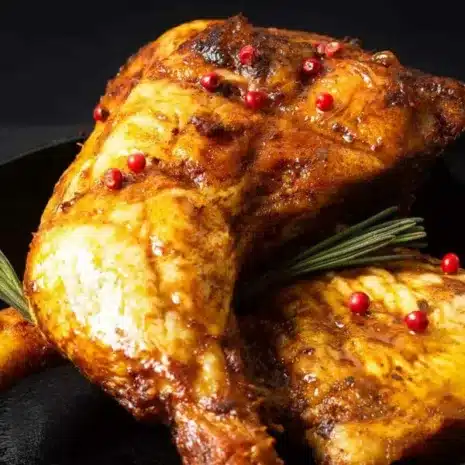
A chicken leg is not a third cut to choose between the other two. It is the thigh and the drumstick still joined at the knee. Buy whole legs for roasting, poaching and value. Buy thighs for the juiciest meat on the grill, in curries and over rice. Buy drumsticks for braises, soups and dinners that come with their own handle.
The usual problem. The recipe says chicken leg, the shelf says drumstick, and the tray in your freezer says thigh. They are family, not triplets. Swap them blind and the braise comes up short of meat, or grill night turns into bone management.
The lower half, mapped
Every cut here is the same piece of chicken, divided differently. The thigh is the upper half of the leg, one flat bone through the middle. The drumstick is the lower half, thick at the knee and tapering to the ankle. Leave the two joined and you have a whole leg. Some shops sell the leg with a piece of the back still attached, and that bigger version is the leg quarter. All of it is dark meat, which means more fat than breast, deeper flavour, and far more forgiveness in the pan. Skin, bone and fat all pull in the same direction here: slower cooking, richer results, harder to ruin.
The thigh: the juicy all-rounder
If one cut had to cover every dinner, thigh would be it. Bone-in with skin, it bakes and grills into the juiciest piece on the bird. Boneless, it lies flat, cooks fast and stays tender, which makes it the right cut for stir-fries, skewers, grill pans and curry. Overshooting a thigh by a few minutes costs you almost nothing, and that buffer is exactly what breast meat never gives you. If your dishes keep coming out dry, switching to thigh fixes more than any technique will. A one-pan sesame oil chicken is the easiest place to start with boneless thigh.
The drumstick: the easy braiser
The drumstick is built for long, wet cooking. The meat wraps a single bone, with plenty of connective tissue running toward the ankle, and it slowly lets go into any braise: soy sauce chicken, curry, stew, the soup pot. It is also the easiest portion in the house. One drumstick per kid, no knife, no argument. The grill is its weak spot. The taper means the thin end dries out while the thick part near the bone is still catching up, so if drumsticks must go over fire, keep them off the hottest zone and turn them often. Done that way, lemongrass drumsticks still earn their place at a barbecue.
The whole leg: both jobs in one piece
The whole leg is the roasting and poaching cut. One leg is one full serving, the skin sits in a single unbroken sheet, and the thigh and drumstick keep each other moist in the oven. It is the shape you see under chicken rice, poached gently so the meat stays silky. It is also often the smart buy of the three: one cut through the knee joint at home turns it into a thigh and a drumstick anyway, and shops often charge less when the cutting is left to you. Ten seconds of knife work is the whole price of entry.
Side by side
| Cut | What it is | Best for | Watch out |
|---|---|---|---|
| Whole leg | Thigh and drumstick joined at the knee | Roasting, poaching, chicken rice, value | Needs one cut if the recipe wants pieces |
| Thigh | Upper half, one flat bone | Grilling, curry, rice bowls, stir-fry when boneless | Trays vary: check skin on or off, bone in or out |
| Drumstick | Lower half, tapered to the ankle | Braises, soups, curries, kids | Uneven thickness makes grilling tricky |
Sorted by dish
- Soy sauce chicken or a slow braise: drumsticks, or whole legs for bigger appetites.
- Chicken rice at home: whole legs, poached gently and rested before chopping.
- Grill or barbecue: boneless thighs, laid flat, skin side down first.
- Curry: mix them. Drumsticks hold their shape through the simmer, thigh meat enriches the gravy.
- Roast dinner: whole legs, one per person, no carving debate.
- Soup and porridge: drumsticks, because the meat slips off the bone right on time.
One more swap worth knowing. Recipes written for whole legs split cleanly into a thigh version and a drumstick version, and most drumstick braises take whole legs without complaint. Dark meat is one family, and the dishes cross over far more easily than the labels suggest. Match the timing to the thickness in the pot and the leg cuts will cover for each other all week. The bigger version of the same question is a whole chicken against parts.
Before it hits the pan
Leg cuts are thick, so give them a full thaw in the chiller before cooking. SFA puts the chiller range at 0°C to 4°C and gives poultry its own check: the joints should be flexible.1 That check could have been written for this cut. A drumstick that will not bend at the knee is still frozen inside, and it will brown outside long before it cooks through. Thaw fully, cook straight away, never refreeze.
Legs, thighs and drumsticks, sorted
Match the cut to the dish and the lower half of the bird will carry your whole week.
- Singapore Food Agency, Guidelines on Thawing of Food (p. 1): “Frozen food is recommended to be thawed in the chiller maintained at a temperature not below 0ºC and not above 4ºC, or by using a microwave oven. Frozen food can also be thawed by submerging in ice water, with frequent change of water and it must be sealed in a clean leak-proof package or container.” On checking: “For poultry, check that the joints are flexible.” And: “Cook thawed meat immediately and do not refreeze thawed food.” sfa.gov.sg (PDF) SFA puts the room-temperature rule plainly on its consumer page: “Do not thaw food at room temperature. It is safer to thaw food by defrosting overnight in the refrigerator, or by using the microwave oven at defrost setting.” sfa.gov.sg ↩︎