
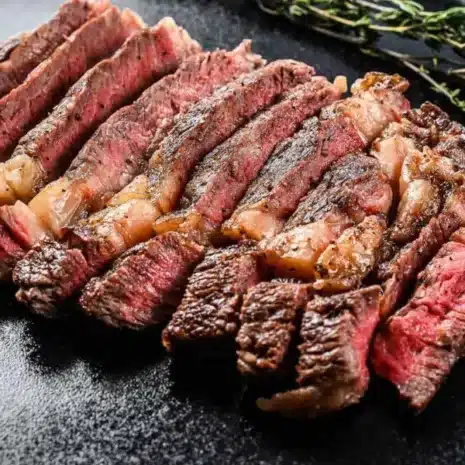
Buy ribeye, unless softness is the whole point of the meal. Ribeye carries fat through the muscle, so it brings more flavour and forgives an extra minute in the pan. Tenderloin is the softest cut on the animal and usually the priciest, and it repays that price only when it is cooked exactly right. For most home pans and most budgets, ribeye is the better steak.
The usual problem. Tenderloin gets bought for the special dinner because it costs the most, then meets a busy stove. Lean meat has no fat to hide behind: one minute past medium and the priciest steak in the freezer turns dry and grey. The ribeye next to it would have shrugged off the same mistake.
Two very different muscles
Ribeye comes from the rib section along the back, a muscle that does light, steady work: enough to build flavour, never enough to turn tough. Fat runs right through it. Tenderloin sits underneath the backbone and barely works at all, which is why it is so soft, and why it carries so little fat of its own.
That one anatomy fact explains everything the two steaks do in your pan. One bastes itself. The other depends entirely on you.
Marbling is the real difference
Marbling is the web of fat inside the muscle. In a hot pan it melts, bastes the meat from within, and carries most of what you taste as beefiness. Ribeye is the showcase for it: when US graders judge a whole carcass, the ribeye is the muscle they read the marbling off.1
Tenderloin has very little of it. Its appeal is texture, not taste: the knife glides, the bite gives way, and the flavour stays quiet and delicate. That is not a flaw. It is the whole product. You just need to know that texture is what the premium is buying. Sliced into a hot wok, that softness turns into zi char black pepper beef.
Side by side
| Ribeye | Tenderloin | |
|---|---|---|
| Marbling | Generous | Minimal |
| Texture | Tender with a satisfying bite | Soft, almost buttery |
| Flavour | Big, beefy, fat-driven | Mild and delicate |
| Forgiveness in the pan | High, the fat covers small mistakes | Low, dries fast past medium |
| Price per kg | High | Usually higher |
| Best for | Everyday great steak, mixed doneness at one table | Occasions where softness is the gift |
Price per serving is where ribeye quietly wins. Its richness satisfies in smaller portions, so a 250 gram ribeye feeds a person generously while lean tenderloin invites bigger cuts to feel like a meal. You pay more per kilo for tenderloin and often end up serving more grams of it too.
The names on the pack
The two cuts travel under several names, so match the muscle, not the label. Tenderloin also sells as fillet, eye fillet, or filet mignon once it is cut into rounds. Ribeye also appears as scotch fillet or cube roll, and with the bone left in it becomes a tomahawk. Same muscles, different packaging.
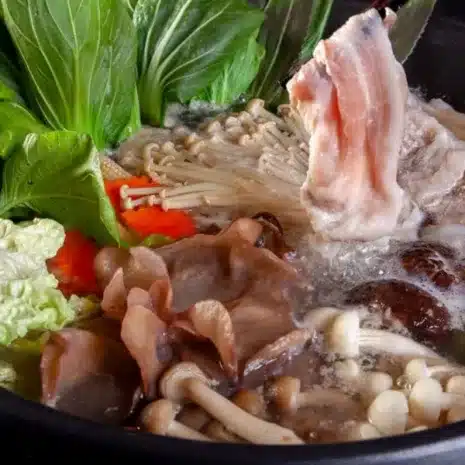
Thickness matters more than the name. A steak around 2.5cm thick gives you time to build a crust before the middle overshoots. Thin-cut steaks of either muscle are for fast, well-done cooking and sandwiches, not for the medium-rare showcase. If the freezer pack offers a choice, take fewer, thicker steaks over more thin ones. Thin ribeye does have one other home, sliced for shabu-shabu.
Choose ribeye if
- You want the most flavour per dollar on the plate.
- The table wants different doneness levels and you cannot babysit each steak.
- You would rather cook relaxed than hover with a thermometer.
Choose tenderloin if
- Softness is the point: someone at the table wants a steak with no chew at all.
- You enjoy a precise cook and will pull it early and rest it properly.
- A leaner plate matters more to you than a rich one.
Cooking notes for each
Ribeye wants a properly hot pan and a confident sear. Stand it on its fat edge for the last minute so the cap renders, then rest it as long as you seared it. Tenderloin wants gentler heat and a shorter stay: pull it before you think it is done and let the rest finish the middle. Dry the surface of either steak before it touches the pan, because a wet steak steams instead of searing.
Where these two sit among everything else on the animal is in our guide to the different cuts of beef. This page is the head-to-head; that one is the map.
Before it hits the pan
Thaw slow and cold, in the chiller overnight. SFA recommends thawing frozen food in a chiller kept between 0°C and 4°C rather than on the counter, checking for ice crystals with your hand or a skewer, cooking thawed meat immediately, and never refreezing it.2 A steak seared with a cold, half-frozen centre greys at the edges before the middle ever warms, and no cut, at any price, survives that.
Flavour first, or softness first
If you are still torn, take the ribeye. It is the steak that forgives you while you learn.
- United States Department of Agriculture, United States Standards for Grades of Carcass Beef: “The marbling and other lean flesh characteristics specified for the various grades are based on their appearance in the ribeye muscle of properly chilled carcasses that are ribbed between the 12th and 13th ribs.” This says the ribeye is the muscle the US system reads marbling off. It is not a ranking of ribeye against other cuts. ams.usda.gov ↩︎
- Singapore Food Agency, Guidelines on Thawing of Food (updated 27 Sep 2024): “Frozen food should therefore not be left to thaw at room temperature, to prevent food poisoning bacteria that may be present from multiplying to high levels. Frozen food is recommended to be thawed in the chiller maintained at a temperature not below 0ºC and not above 4ºC, or by using a microwave oven.” The same document adds: “Check for ice crystals in the food using your hand or a skewer”, and “Cook thawed meat immediately and do not refreeze thawed food.” sfa.gov.sg ↩︎