
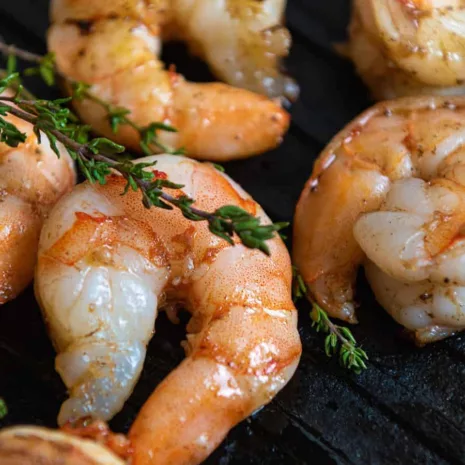
The numbers on a prawn bag are a count, not a code. 31/40 means there are 31 to 40 prawns in every pound of prawn, which is about 454 grams. The smaller the numbers, the bigger each prawn. A U in front, like U10, means under that many per pound: those are the giants.
The usual problem. One bag says 31/40. The next says Large. A third says Jumbo. You cannot judge size through frost and glaze, and the names do not line up between brands. The names are marketing. The count is the measurement, and once you can read it, any two bags in the aisle become comparable.
How the count works
The count-per-pound label comes from the seafood trade, where prawns have always been sold by how many make up a unit of weight. 31/40 is a promise about range: open the bag, weigh out a pound, and you should find between 31 and 40 prawns in it. 16/20 gives you 16 to 20 much larger ones for the same weight.
Two things to check on the label. First, the unit: most packs count per pound, but some count per kilogram, and 31/40 per kilo is a much smaller prawn than 31/40 per pound. The standard behind frozen prawn packing leaves the unit to the pack, so the pack has to tell you. Second, the glaze: frozen prawns wear a thin coat of ice to protect them in the freezer, and the count and net weight are meant to be measured without it.1 A bag that feels heavy but rattles with ice is not extra prawn.
The size bands, translated
| Label | Prawns per pound | What that looks like | Best for |
|---|---|---|---|
| U10 | Under 10 | Giants, one fills your palm | Grilling whole, the barbecue centrepiece |
| 16/20 | 16 to 20 | Very large | Butterflied garlic prawns, showing off |
| 21/25 | 21 to 25 | Large | Sambal prawns, steamboat |
| 26/30 | 26 to 30 | Solid mid-size | Steamboat, curries, noodle soups |
| 31/40 | 31 to 40 | The mid-size workhorse | Stir-fries, sambal, hor fun |
| 41/50 | 41 to 50 | Small | Fried rice, mee goreng, omelettes |
Price follows the count. The smaller the numbers, the more you pay per kilo, because you are paying for size, not for more prawn. Two bags of the same weight can cost very different amounts and hold exactly the same amount of meat.
Which size for which dish
Big prawns, U10 to 16/20, are for dishes where the prawn is the event: grilled in the shell, butterflied under garlic butter, laid on top of a birthday noodle platter. You buy a few and they carry the meal. Cooking them is mostly about not overcooking them, because big prawns take longer than your instincts say.
Mid-size prawns, 21/25 to 31/40, are the all-rounders, and 31/40 is the sweet spot for everyday cooking: big enough to stay springy in a stir-fry, small enough that a generous handful goes into fried rice without wrecking the budget. If you keep one bag in the freezer, make it this one. They are the right size for salted egg prawns too.
Small prawns, 41/50 and up, are for mixing in, not showing off. They cook in moments and spread through a dish, so every spoonful of fried rice or omelette gets some. They are also the cheapest way to put prawn flavour on a weeknight table.
The other letters on the bag
Size is only half the label. The rest tells you how much work is left in the bag. Head-on shell-on prawns, sometimes marked HOSO, bring the most flavour to grills and stocks, but heads and shells are weight you will not eat. HLSO means headless but still in the shell, the usual pick for steamboat and sambal. Peeled and deveined, marked PD, goes straight into the pan, and PDTO keeps the tail tip on for the look.
Peeled meat costs more per kilo than the same prawns in the shell, because someone else did the peeling. That is a fair trade on a busy weeknight. Do it yourself when the dish wants shells anyway, since prawn shells simmered in the pot are free flavour you already paid for.
How many to buy
As a main, plan around 8 to 12 mid-size prawns per person, more if the shells are on since shell is weight you do not eat. Folded into rice or noodles alongside other things, half of that is plenty. The count label turns this into simple arithmetic: dinner for four at ten prawns a head is forty prawns, which is one full pound of 31/40.
One thing the count does not tell you is the species. A 31/40 bag can be black tiger or vannamei, and that choice is about flavour and bite rather than size. We compared them in our black tiger vs vannamei guide. Size to the dish, species to your taste.
Before the bag opens
Buy loose-frozen prawns where you can. They pour out one by one, so you take exactly the number dinner needs and the rest goes straight back to the freezer still frozen. SFA says to thaw only the amount of food you require for cooking, and a counted bag makes that easy to follow to the prawn.2 The next step is thawing prawns the fast way, which means ice water, not the counter.
Buy the count, not the adjective
Once you read 31/40 without blinking, every bag in the freezer aisle is comparable. Pick the size your dish wants.
- Codex Alimentarius, CXS 92-1981, §2.3: “The shrimp may be packed by count per unit of weight or per package.” The standard never fixes that unit, so the pack has to tell you. §7.4 works the count out by “dividing the count of shrimp by the actual de-glazed weight”, and §6.2: “Where the food has been glazed the declaration of net contents of the food shall be exclusive of the glaze.” fao.org (PDF) ↩︎
- Singapore Food Agency, Guidelines on Thawing of Food (updated 27 September 2024): “Thaw only the amount of food you require for cooking.” SFA also says frozen food “should therefore not be left to thaw at room temperature”, recommending a chiller “not below 0ºC and not above 4ºC, or by using a microwave oven”, and: “Cook thawed meat immediately and do not refreeze thawed food.” sfa.gov.sg (PDF) ↩︎