
Black Tiger prawns hold their shape and their bite in a hot steamboat pot. Vannamei cook faster and taste sweeter, but turn tough if you leave them in. Pick Black Tiger for a slow, chatty pot. Pick Vannamei for a fast pot where you eat as you cook.
The usual problem. You buy whichever prawn looked good in the freezer, tip the lot into the pot, and half of them come out tight and squeaky while everyone is still talking. That is not a bad prawn. It is the wrong prawn for the way your table eats.
Side by side
| Black Tiger | Vannamei | |
|---|---|---|
| Species | Penaeus monodon | Litopenaeus vannamei, also called Pacific white shrimp |
| Raw | Grey-black stripes across a pale shell | Pale shell, almost see-through |
| Cooked | Deep reddish-brown, meat turns solid white | Light pink-orange |
| Size | The bigger of the two, 15 to 30g a prawn | Smaller, sold in higher counts |
| Texture | Firm, snaps when you bite it | Softer |
| Flavour | Strong and sweet, tastes of the sea | Mild and sweet |
| In the pot | Forgiving, an extra minute will not ruin it | Fast, roughly 60 to 90 seconds, then rubbery |
| Best broth | Tom yum, mala, anything heavily spiced | Clear soup, light chicken broth |
| Price | More per kilogram | Less per kilogram |
What Black Tiger prawns are
Black Tiger prawns (Penaeus monodon) have black stripes across a pale shell. Raw, the stripes look grey-black. Cooked, they turn deep reddish-brown and the meat turns solid white. A single prawn can weigh 15 to 30 grams, bigger than most Vannamei you will find, and the meat is firm enough to snap when you bite it.
Steamboat restaurants often put Black Tiger prawns on top of the platter, because the size and the stripes look good on ice.
What Vannamei prawns are
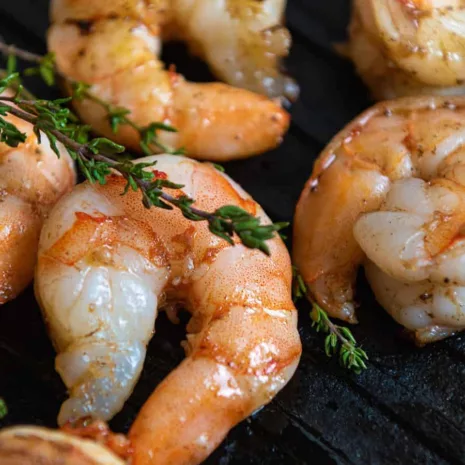
Vannamei prawns (Litopenaeus vannamei), also called Pacific white shrimp, are the most farmed shrimp in the world.1 The shell is pale and almost see-through before cooking, then turns light pink-orange once cooked. The meat is softer, and the taste is mild and sweet, with less of the strong sea flavour Black Tiger prawns have.
They are usually sold by count, printed on the bag as a pair of numbers like 26/30 or 41/50. That count is worth reading properly before you buy, and there is a catch in it that the section below covers.
How each one handles the steamboat pot
This is where the real difference shows up, and it comes down to size. The international standard for quick frozen prawns says plainly that cooking time follows the size of the product, and that the failure to avoid is overcooking.2 A bigger prawn buys you slack. A smaller one does not.
Black Tiger takes heat well. The firm meat means an extra minute in the broth will not turn it tough. You can drop them in, keep talking, and pull them out a bit late without ruining them.
Vannamei cooks fast, often in 60 to 90 seconds once the broth is back to a boil. That figure is our own from the counter, not a rule from a book, so treat it as a starting point and watch your own pot. Leave them in two minutes and the texture goes tight and rubbery. On a slow steamboat night with lots of talking, Vannamei is easy to overcook by accident. A rushed thaw does the same damage, so thaw them fast the right way before they hit the pot.
Flavour and broth
Black Tiger prawns carry their own strong, sweet sea flavour, so they still taste like themselves even in a heavily spiced broth like tom yum or mala.
Vannamei prawns are milder, so they soak up more of the broth around them. In a clear soup or a light chicken broth, that mild taste lets the broth come through in every bite.
Price and size
Black Tiger prawns cost more per kilogram. They grow bigger and take longer to farm. Vannamei prawns cost less and are the more common everyday choice, which is why they show up most often in supermarket freezers and mixed seafood packs.
For a special occasion with a small group, the higher price on Black Tiger buys a bigger prawn that looks good on the table. For a regular weekend pot feeding a full family, Vannamei keeps the cost down without anyone going hungry.
What to check before you buy
- The count, and the weight it is counted against. A lower number like 16/20 means bigger prawns. A higher number like 41/50 means smaller ones. Check whether the pack counts per kilogram or per pound, because the same two numbers mean a very different prawn either way. The count is worked out on the de-glazed weight, and the ice glaze is not supposed to be in the net weight you paid for.3 Match the count to how many people are eating.
- IQF or block frozen. IQF (individually quick frozen) prawns separate easily, so you only thaw what you need. Block frozen prawns need the whole block thawed at once. SFA’s thawing guidance is to thaw only the amount you need, cook it straight away, and never refreeze it, which makes IQF a safety point and not just a convenience.4
- Deveined or not. Deveined prawns save prep time at the table, useful if kids are eating too.
- Shell on or off. Shell-on prawns hold their shape and flavour better in the pot. Peeled prawns cook a little faster and are easier to eat straight off the ladle.
The short version
Choose Black Tiger for a slower pot, a spiced broth, or a table that wants a bigger prawn to look at. Choose Vannamei for a fast pot, a mild broth, or a tighter budget feeding more people.
Pick the prawn your pot actually wants
Black Tiger for the slow, chatty pot. Vannamei for the fast one. Both worth buying IQF, so you thaw only what you cook.
- FAO, The State of World Fisheries and Aquaculture 2024: “At the species level, whiteleg shrimp (Penaeus vannamei), with 6.8 million tonnes, was the top species produced in 2022”, and “aquaculture was the main source of production of the top five species”. fao.org ↩︎
- Codex Alimentarius, CXS 92-1981, Standard for Quick Frozen Shrimps or Prawns, §7.6: “The product must not be overcooked. Cooking times vary according to the size of the product and the temperature used.” The same clause declines to give a number, saying exact times “should be determined by prior experimentation”, which is why the seconds on this page are our own counter experience rather than a rule. §7.6 sits in the standard’s sampling and analyses section, so it is written for inspectors examining a sample, not for a home pot. fao.org (PDF) ↩︎
- Codex Alimentarius, CXS 92-1981, §2.3: “The shrimp may be packed by count per unit of weight or per package.” The standard never fixes that unit, so the pack has to tell you. §7.4 works the count out by “dividing the count of shrimp by the actual de-glazed weight”, and §6.2: “Where the food has been glazed the declaration of net contents of the food shall be exclusive of the glaze.” fao.org (PDF) ↩︎
- Singapore Food Agency, Guidelines on Thawing of Food (updated 27 September 2024): “Thaw only the amount of food you require for cooking.” SFA also says frozen food “should therefore not be left to thaw at room temperature”, recommending a chiller “not below 0ºC and not above 4ºC, or by using a microwave oven”, and: “Cook thawed meat immediately and do not refreeze thawed food.” sfa.gov.sg (PDF) ↩︎